Introduction
At Orion Education, we have been wrestling with the wicked problems of school improvement for some time. Our mission, to improve outcomes and transform lives is driven by a passion to create social justice.
Leading school improvement is complex. The kind of school improvement, that closes gaps for young people from disadvantaged backgrounds, while holding on to values. Currently, 2 million children identified as being from disadvantaged backgrounds are behind their peers academically, with 25% achieving grade 5 in English and Maths in 22/23 compared to 52% of those pupils not known to be disadvantaged. (Improving Educational Outcomes for Disadvantaged Children, 2024-2025). This won’t be news to you.
In four of our secondary schools the progress of disadvantaged pupils has remained stubbornly difficult to crack. Progress has been much slower than we would have liked. We’ve been to great schools, codified our models, standardised where we needed to. We’ve developed standards and rubrics, held rigorous line management meetings and focussed on developing a healthy culture. There is a high-quality professional growth model in place that includes instructional coaching for teachers, and we are careful to make teaching and learning our priority.
When we discuss the complexities, we face. We always come back to capacity. Leaderhsip capacity.
The state of play with school leadership
The fact that this remains a ‘wicked problem’, as Ben White defines it, highlights that we don’t all agree on the solution (White, 2019). However, we do seem to agree on the impact of leaders in a school and specifically the Headteacher.
Replacing an ineffective headteacher (identified as being in the 16th percentile) with an effective headteacher (in the 84th percentile) increases pupil attainment by an average of two GCSE grades across all subjects. (James Zuccillo, 2023)
Of course, this is rhetorical. We need to develop the leaders that we have and ensure that when leaders arrive at their first headship they are prepared for the complexity of the role. I will come to that.
There are many examples of great leadership within schools. Leaders who are securing great progress for young people, while supporting them to develop the social and cultural capital that will allow them to stand up against those from more privileged backgrounds. Some schools are having a dramatic impact on the outcomes of pupils from disadvantaged backgrounds. Indeed, some academy trusts are reducing variability at scale, across multiple schools.
Analysis shows that: “The top 10% of MATs outperform the highest performing LAs by 0.2 Progress 8 score. (Trusts, 2025)
It must be the case that consistent, regular and high-quality leadership development within some multi academy trusts is making a real difference. Approaches to talent, to professional development and accountability, along with codified models of success for leaders do reduce variability.
What had happened the national dialogue around school leadership?
Let’s be clear, the system has been doing a good job with budgets that have not really changed for several years. The reason that some schools and trusts succeed with disadvantaged pupils, while others don’t is always a question of leaders. Unfortunately, it is my view that the national conversation around leadership in schools needs to improve. We need a strategic approach that ensures that our headteachers are able to thrive and to accelerate the progress of disadvantaged pupils.
Developing Headteachers
If we are to succeed in developing great headteachers we need to focus on developing the mental models that they have and in developing support to ensure that they are resilient to complexity. Tom Rees argues that the orthodox view of school leadership is dominated by an approach characterised as generic leadership. In recent years this has been at the expense of domain specific leadership. (Rees, 2020). Tom Rees and Jen Barker go on to address the complexity of the leadership role in schools by focussing more on the specific skills that leaders need.
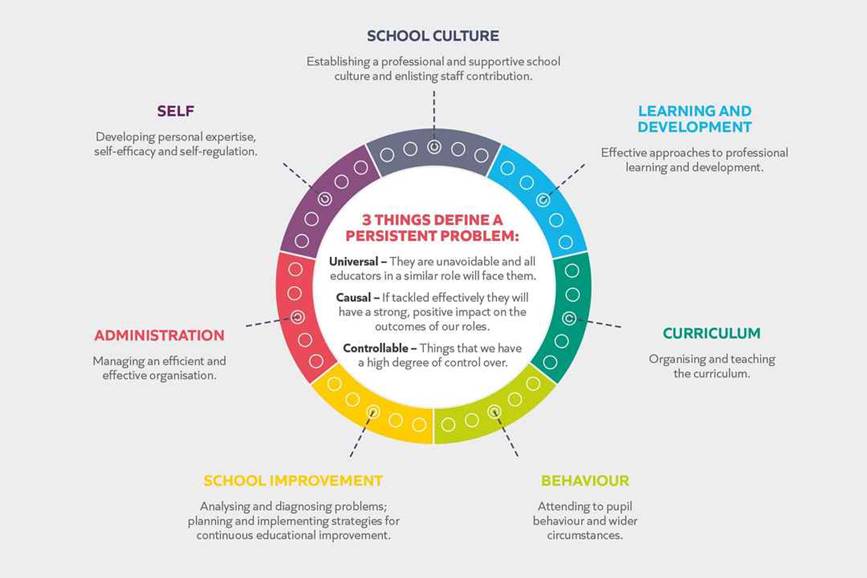
This was an important piece of work, particularly in the context of a recruitment and retention crisis across our schools. Those of us who have been doing this longer, see more and more leaders moving through promotion without the mental models to deal with the complexities they face. Mental models play an important role in leadership, they are where we turn in moments of complexity. (Quinlan, 2018). More and more there is a need for good examples of domain specific leadership programmes, shared across trusts and schools.
Approaches to developing domain specific leadership programmes.
Many trusts and schools are developing effective approaches to domain specific deficits in leadership. A huge amount of time and effort across several trusts is going into developing the programs. They include;
- Induction programs for new leaders
- Coaching from experienced staff
- Leadership development sessions
- The NPQs
- Middle Leader Programmes
Leadership Development at Orion Education
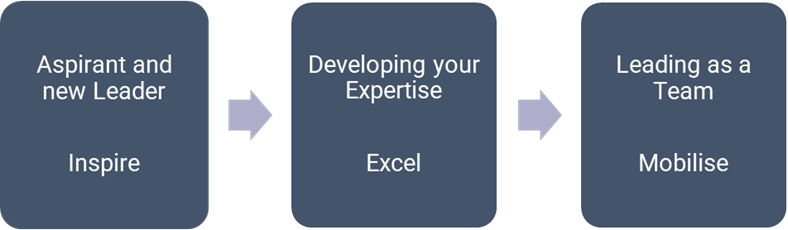
We have been looking for ways to move forward with our leadership strategy. I would love to hear other people’s thoughts on how we are doing. Our three strands of leadership development focus on new and aspirant leaders, those currently in role and improving their work through responsive coaching and finally a mobilise strand where we work with leadership teams to develop impact. It’s early days for us but we are hopeful that our model will accelerate the progress of our young people and our leaders.

 Search for Success
Leave a comment